
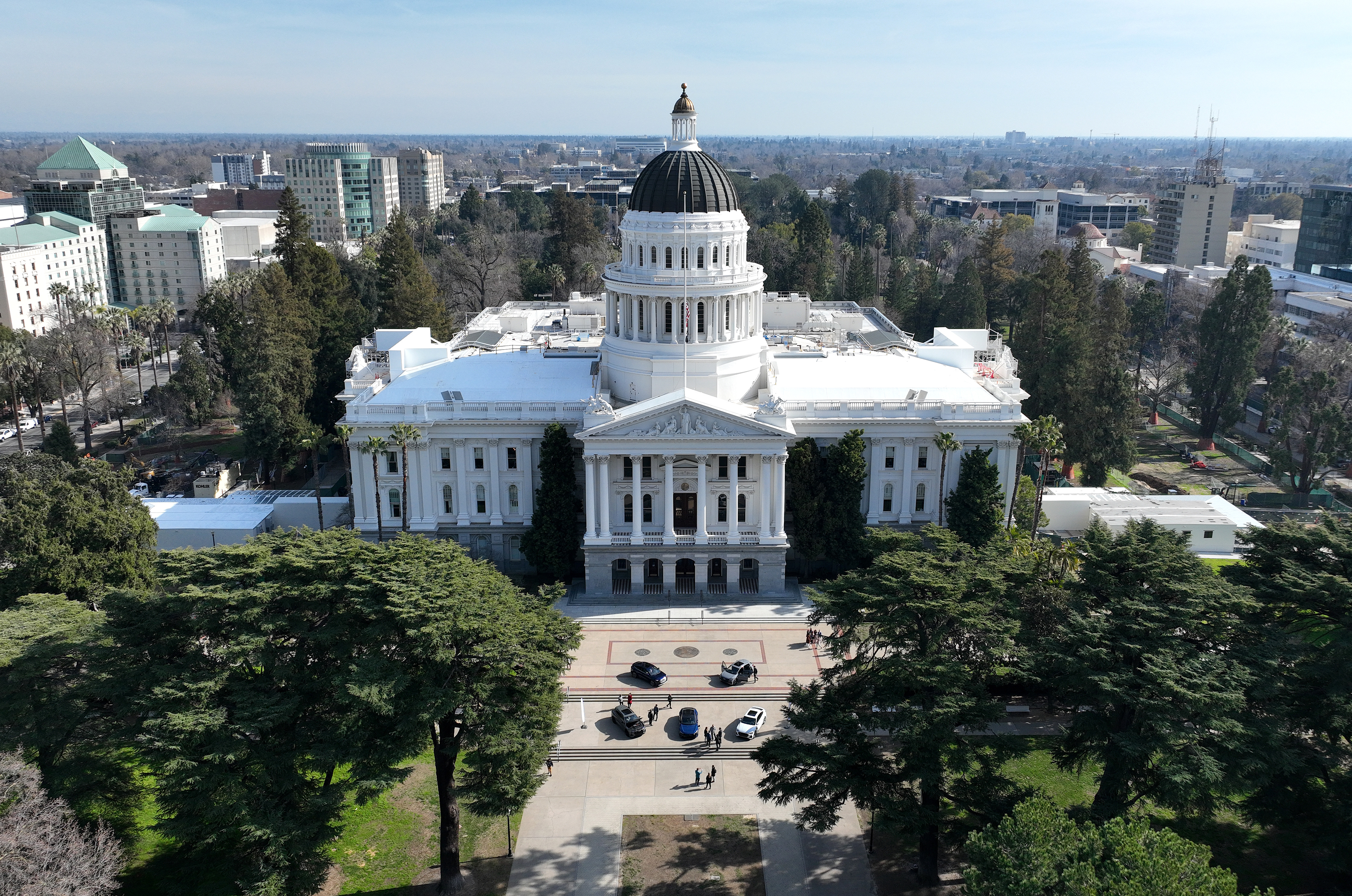
In California there is a state government agency for whose institutions voters elect representatives in each electoral year.
It is the Board of Equalization – Board of Equalization or BOE for its acronym in English. It plays an important role in California’s finances, stability and growth.
However, voters often ignore what it is responsible for and what its importance is. In this it differs from the other positions that the voter elects directly: governor, lieutenant governor, secretary of state, attorney general, treasurer, comptroller, superintendent of public education and insurance commissioner.
In itself, the fact that its members are elected and not named indicates the importance that the state gives it. The thing is that these members have a direct influence on the life of the population, as much as the other elective positions.
It is made up of four members elected for four-year terms, representing as many districts, in addition to a fifth ex-officio member who is the State Controller.
In November of the new year, voters will be able to elect new representatives for this office.
“The Board of Equalization plays a critical role in California’s tax system,” state Assemblyman Mike Gipson, who since 2014 represents the 65th district, which includes cities in southern Los Angeles County, tells me in an email.
“When working properly, it helps ensure equity, consistency and accountability in property tax assessments across the state. This work is important because these assessments directly impact local services, schools and families’ cost of living,” adds Gipson.
This assemblyman has recently launched his candidacy to integrate the Board of Equalization.
Affordability
For President Donald Trump, affordability – understood here as the degree of sufficiency of income to cover needs – has improved “like never before in the history of our country“Ignore the numbers published by their own agencies, the evidence from grocery stores, the repeated stories that tell a single story: people can’t afford what they earn.
It is precisely the degree of affordability in the population that also reflects the work of the state Board of Equalization. Established by constitutional amendment in 1879, it predominates in the property tax system.
The Board determines the value of properties owned by public utility companies including railroad companies. It is the accountability mechanism when assessments are challenged, for taxpayers who do not agree with the assessments of real estate, the tax on alcoholic beverages or that of insurance companies.
Its task of coordination and control can guarantee the equity and coherence that society needs for its harmonious functioning.
tax assessors
Although they are tax assessors to the property of California’s 58 counties who determine the evaluation methods, the Board of Equalization supervises and guides them. It establishes rules and regulations and ensures that there is no discrepancy between appraisal methods in each county, including complex issues such as fluctuating construction costs and factors that affect equipment.
It also addresses the population directly with help on topics such as navigating the ins and outs of the Proposition 19 of 2020, that protects homes to “Older People, People with Serious Disabilities, Families and Victims of Forest Fires or Natural Disasters.”
In the fiscal year that ended in June 2023, the board was responsible for a net fiscal value of $7.8 trillion, resulting in the imposition of $85.3 billion in taxes collected that helped fund public education, roads and parks, and police and firefighters.
The limitations
It is not a perfect agency. It would be if its work were broader and its actions more public knowledge.
For example, until 2017 the BOE was also in charge of controlling the sales tax, a function that From then on it derived to the newly created California Department of Tax and Fee Administration (CDTFA).
For Gibson, with that measure – AB 102 – “the Legislature took away important powers from the Tax Equalization Board and created a new agency with limited oversight and little transparency.”
It is, ultimately, the degree of transparency that can interfere with the relevance of this agency and its contribution to the well-being of communities.
“I believe,” adds Gibson, “that fiscal issues must include oversight by accountable elected officials who the public can demand transparency. When that accountability is lacking, taxpayers are left unprotected and bureaucrats gain more power.”
“Modernizing the way the Board communicates, through clearer data, more accessible explanations and consistent public participation, would make the agency more relevant and accountable,” says the 59-year-old assemblyman.
“This includes making oversight of assessments more visible, strengthening reporting on county practices, and ensuring the public knows where to go when questions or disputes arise.”
Affordability, once again
The board’s decisions on assessments directly affect housing costs, rental pressures, and resources available to cities, counties, and schools. It is there that tenants feel the effects of the decisions made by officials.
The board of equalization is then a discreet but powerful actor in the daily life of Californian families. It influences investment in neighborhoods, funding for schools, equitable taxation across the state.
Hence its role in the affordability and general standard of living of the population. Hence the relevance of the Board of Equalization in the political and economic discussion about what surrounds us. Hence we care about the composition of the board members. It requires experienced, trusted leaders, faithful to their position and the community they represent.
“A Board of Equalization leader needs a solid understanding of how the system works, but, just as important, a clear sense of responsibility to the public. This position requires independence, a commitment to fairness, and a willingness to ask tough questions when something doesn’t add up,” says Gipson.
“It also,” he says finally, “requires humility: recognizing that when an institution loses public trust, rebuilding that trust begins with transparency, consistency, and respect for the communities affected by its decisions.”