
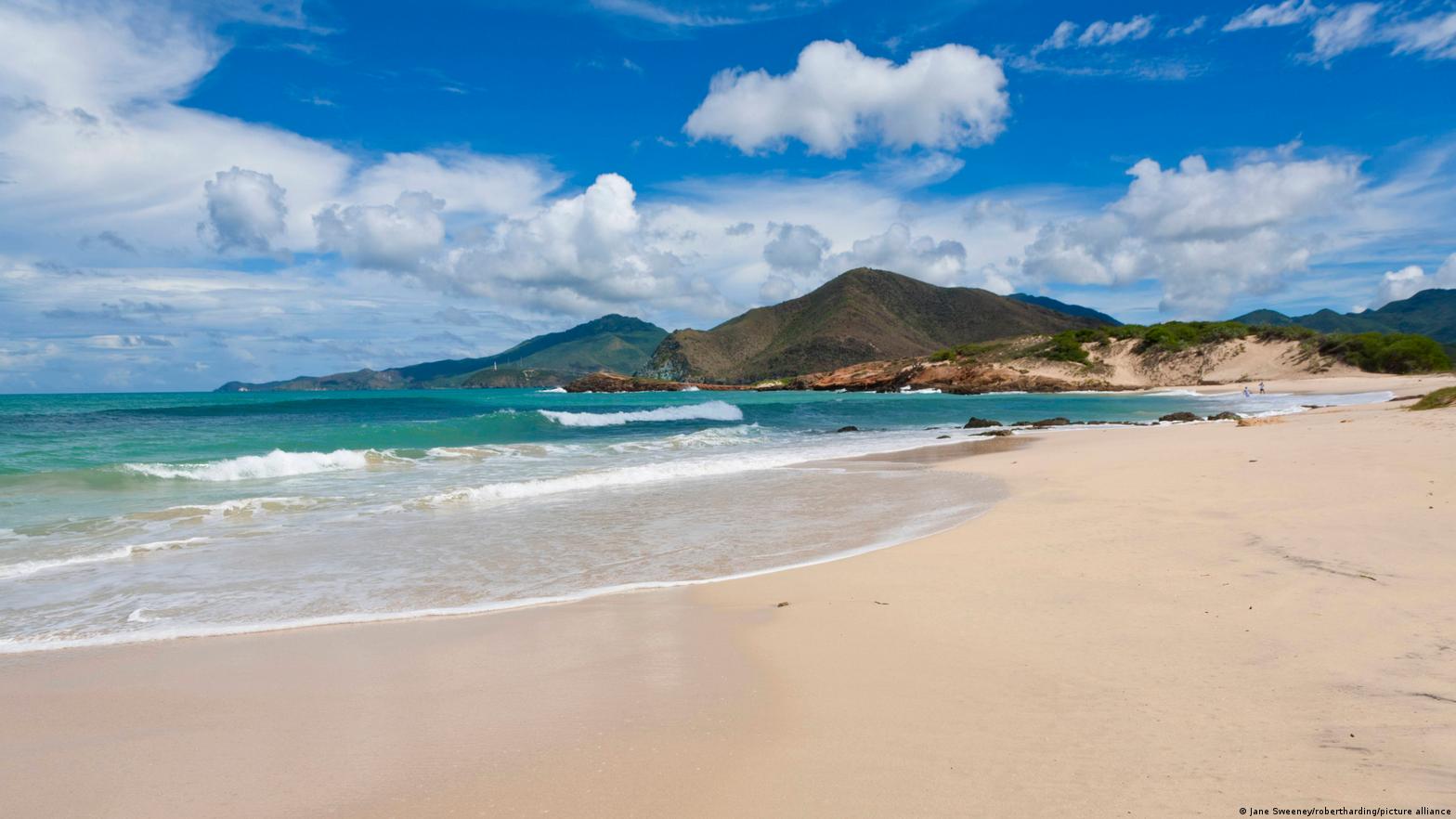
The Russian travel agency Pegas Touristik, which frequently flew to the Nueva Esparta archipelago, which includes Margarita Island, in northern Venezuela, heeded a US alert this Sunday and suspended its flights, the AFP and EFE news agencies report.
As indicated by the Association of Russian Tour Operators (ATOR) on its official website, this decision was made due to “the potential threat to the security of civil flights in Venezuelan airspace due to the conflict with the United States”.
Since 2021, Venezuela and Russia have signed several tourism agreements, thanks to which Nueva Esparta has received thousands of Russian tourists who contribute to the island’s economy, mainly dependent on tourism.
US Air Alert
Last week Washington issued an air alert due to growing military activity in the areafollowed by six airlines that suspended their connections with Venezuela: the Spanish Iberia, the Portuguese TAP, the Colombian Avianca, the Colombian subsidiary of the Chilean-Brazilian Latam, the Brazilian GOL and the Turkish Turkish Airlines.
The Venezuelan aeronautical authority consequently revoked the concessions to operate in its country to these airlines, all of whom were accused of “joining terrorist actions” promoted by the United States.
Other airlines such as Air Europa and Plus Ultra also suspended their operations with Venezuela. Copa, Wingo, Boliviana de Aviación and Satena, as well as the local companies Avior and the state-owned Conviasa, maintain their flights to the South American nation for now. With Conviasa, Venezuela maintains, for now, its two routes to Russia, an ally of Chavismo.
Airspace “completely closed” by Trump
The United States promotes a maritime and now aeronautical fence over Venezuela and its surroundings, after President Donald Trump warned on Saturday that the Caribbean country’s airspace should be considered “completely closed.” Previously, it had announced “very soon” land operations in Venezuela.
The deployment of the United States, which has been carrying out a supposed anti-drug operation in the Caribbean since August, includes destroyer ships, fighter planes, thousands of troops and the largest aircraft carrier in the world. Venezuela assures that the maneuvers are not intended to combat drug trafficking, but rather to overthrow Maduro and seize his oil.
The authorities of Guyana and Trinidad and Tobago, countries neighboring Venezuela, have confirmed that airlines continue to operate in their airspace normally.
Complaint to the ICAO and support from Petro
The Government of Venezuela went this Sunday before the International Civil Aviation Organization (ICAO) to accuse the United States of violating its sovereignty.
In a statement, published and later deleted from the social networks of the Minister of Transportation, Ramón Velásquez Araguayán, the Maduro Administration indicated that Trump surprisingly announced the “alleged closure of Venezuelan airspace”“, without having – he stated – the authority required for an announcement of this nature and without any legal basis.”
In addition, he reiterated that the National Aeronautical Institution (INAC) is the only entity authorized to regulate Venezuelan airspace.
The president of Colombia, Gustavo Petro, asked the ICAO to call a meeting for what he called a “completely illegal” closure announcement by Trump. And he also asked the European Union (EU) to order the normalization of flights to and from Venezuela.
Venezuelan Parliament announces investigation
On the other hand, the president of the Venezuelan Parliament, Jorge Rodrígez, reported that he met with relatives of Venezuelans who died in the United States attacks on boats in the Caribbean Sea, which were allegedly transporting drugs.
Rodríguez showed a photograph of the meeting without revealing the identities of the relatives because, he assured, they have received threats “from sectors and people who have a maximum interest in them not telling the truth and in not clarifying the facts.”
The parliamentarian announced that this Monday an extraordinary session will be held to vote on the formation of a special commission to investigate these events and that must determine how many Venezuelans have lost their lives in these attacks, since there are citizens of other nationalities, such as Colombians, Dominicans and Trinidadians.
To date, The United States has announced attacks against 20 vessels, in the Caribbean and the Pacific, in which some 83 people have died.