
Mexican cuisine is celebrating after this November 16, 2025 marks 15 years of being declared intangible cultural heritage of humanity by the United Nations Educational, Scientific and Cultural Organization, UNESCO.
In an interview for La Opinión, the president of the Conservatory of Mexican Gastronomic Culture, Gloria López Morales, who was one of the people who participated in the research and registration work so that Mexican cuisine became cultural heritage, shares that great historical moment that Mexico experienced more than a decade ago.
“What we achieved 15 years ago with UNESCO inscription is a privilege, it is an obligation and it is a responsibility… It means a great privilege because the qualities of our culinary cultures of our food system are recognized, but at the same time it means a great responsibility because we have to safeguard the heritage and we have to protect it,” says Dr. López Morales with great joy.
–Where did the idea to register with UNESCO come from?–
“In many places, no one invents the black thread, but UNESCO was establishing its list of cultural heritage to be safeguarded and that must be rescued. It occurred to several people, including me of course, that the most important cultural heritage, or one of the most important, is the heritage that comes from the furrow and reaches the tables.which is what allows us to eat and make a meal full of creativity. Of course, biodiversity and the cultural diversity of the countries in the regions influence this and we incorporate that into a file,” he commented.

For Dr. López Morales, it was not easy for Mexico to be granted this declaration because UNESCO had to be convinced, through a file and with arduous scientific research, why Mexican cuisine should be a gastronomic heritage.
It was in 2005 that the Mexican government made a first attempt to register corn as the central axis of Mexican cuisine with UNESCO. in a document that was named “Maize Town. The ancestral cuisine of Mexico. Rites, ceremonies and cultural practices of the cuisine of Mexicans.”

However, this file was rejected and was only Until 2010, UNESCO recognized Mexico by presenting a candidacy that would have as its axis the gastronomy of Michoacán with recipes from indigenous communities.
“The idea is easy to conceive, what is very difficult is to give it a sufficiently convincing structure and scientific consistency and that is what we did to prepare the file,” said the writer.
–So, was it difficult to achieve this recognition?–
“Yes, it was because countries had never thought of inscribing gastronomic heritage on a list of cultural heritage. from an international organization, so we had a lot of work for several years to prepare the file that was finally registered in 2010 with the international organization,” the journalist also mentioned.
The Mexican government, through a statement released by the Ministry of Culture on November 16, 2010 – during the six-year term of Felipe Calderón Hinojosa – announced that “in an unprecedented eventthe Intergovernmental Committee for the Safeguarding of the Intangible Cultural Heritage of UNESCO, during its Fifth Ordinary Meeting held in the city of Nairobi, Kenya, from November 15 to 19, has registered the Traditional Cuisine of Mexico in the Representative List of the Intangible Cultural Heritage of Humanity”.
“There were several criteria ranging from antiquity, historical continuity, the identity axis that the kitchens constitute, the sense of belonging, the originality of the products. and the ability of these cuisines to incorporate external influences,” said Dr. Morales, who was a member of the Mexican delegation that traveled to Kenya in 2010 to witness the declaration.
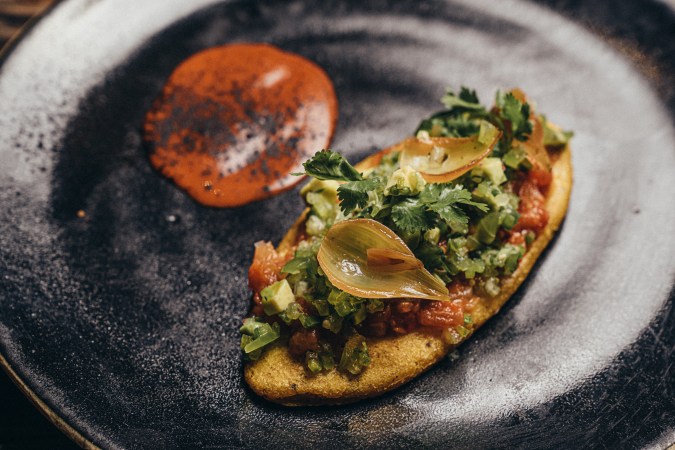
According to UNESCO, in the document titled “Traditional Mexican Cuisine: A Community, Ancestral and Living Culture and the Paradigm of Michoacán,” it states that “Traditional Mexican Cuisine is a complete cultural model that includes agrarian activities, ritual practices, ancient practical knowledge, culinary techniques, and ancestral community customs and modes of behavior.”
“What makes Mexican cuisine its unique character is its ability to have assimilated influences, currents and products from all corners of the world. given its geographical and strategic location that looks on the one hand towards Europe, the Mediterranean, the Middle East and on the other hand to the Asian part, to Asian diversity. In short, Mexican food very soon incorporated products from cultural influences from all corners of the world,” argued Gloria López Morales.
–What would be your advice to continue preserving this cultural heritage?–
“Youth have to inform themselves, prepare themselves, educate themselves, train themselves so that the cuisine that has all that wonder and spontaneity that kitchens in the world have, come together in knowledge to create awareness about the need for cuisine to always go parallel to the requirements regarding the environment, the fertility of the earth and also the nutritional requirements of our times. Young people also have to become aware of their own rich food culture like the one we have.”, mentioned the former Mexican diplomat.

This recognition granted to Mexican cuisine, thanks to its ancient techniques and pre-Hispanic traditions that include the use of ingredients such as corn, chili and beansas well as the use of the comal and the molcajete, among others, It is only shared with three other kitchens more: the French diet (recognition awarded in 2010), the Mediterranean diet (recognition awarded in 2013), and the Japanese diet (recognition awarded in 2013).
“Migrants and Mexican residents abroad, the first thing they carry in their suitcases, in their backpacks, is their kitchen.. The account of their maternal cuisine, the nostalgia of their flavors and that they try very faithfully to reproduce wherever they are. I am surprised and I have been able to observe the flourishing, the inclusion of Mexican cuisines in the United States.. What I could aspire to is that we continue creating links so that everything that continues to happen in terms of evolution, innovation and awareness about the roots of cuisine, continues to spread, that there continues to be that necessary transmission of knowledge. The tortilla knows no borders and I want this maxim to remain in force. May Mexican cuisine continue as vibrant as it is doing right now. We have to continue working together to enhance Mexican food,” said Dr. Gloria López.

Given the declaration granted by UNESCO 15 years ago, The Mexican government, through the Ministry of Tourism, decreed in 2016 that November 16 would be the “National Day of Mexican Gastronomy.”in which various activities would be carried out year after year with the aim of extolling the natural and cultural wealth of Mexican cuisine.