
At least 15 people died in accidents involving Tesla vehicles in which the doors could not open after impactaccording to recently analyzed reports and accident records.
Read also: 2026 Nissan Pathfinder: Subtle redesign and price increase
The problem is not minor: In several of these accidents, the vehicles caught fire seconds after impact, and the occupants were trapped inside.
You can read: Does Tesla buy its own Cybertruck to inflate sales?
Recent research indicates that more than half of these cases have been recorded since the end of 2024, which has raised alarms both in regulatory agencies and among consumers and road safety experts.
How the doors work and where the fault appears
On models like the Model 3 and Model Y, the handles rely on an electrical system powered by a 12-volt auxiliary battery. This approach eliminates traditional mechanical mechanisms and reinforces the brand’s minimalist aesthetic. The problem arises when, after a severe collision, that battery stops working.
When this occurs, the doors may remain locked, even if the vehicle detects an impact. Tesla does incorporate manual emergency opening systems in the front doors, but their location is not always obvious. In many cases, these levers are hidden under moldings, carpeting, or plastic panels, making them difficult to find in extreme panic, smoke, or fire situations.
On rear doors, the procedure is even more complex, since it requires removing covers or following specific instructions that few users know by heart.

Accidents, fires and a worrying pattern
An analysis of thousands of fire accident reports since 2012 identified 12 confirmed incidents in which Tesla vehicle doors failed to open.not even by rescuers. Although not all cases resulted in deaths, the pattern repeats itself frequently enough to raise concern.
Among the most shocking episodes are accidents in the United States and Europe. In Wisconsin, five occupants of a Model S They died trapped after a crash followed by fire. In Germany, two children and an adult died when witnesses failed to open the electronic doors of a Tesla engulfed in flames.
A fatal accident was also reported in a Cybertruckwhere a young woman could not get out of the vehicle during a fire, and another accident in which four friends burned to death inside a Model Y. The speed with which fire spreads in electric vehicles makes every second crucial, and any delay in opening doors can mean the difference between living and dying.
Official investigation and regulatory pressure
Given the magnitude of the problem, In September 2025, the National Highway Traffic Safety Administration (NHTSA) opened an investigation into 174,000 units of the Tesla Model Y, manufactured between 2021 and 2025. The investigation seeks to determine whether handles that stop responding after impacts or prolonged use constitute a serious safety defect.
Although no specific injuries have been officially linked to this investigation so far, the context is delicate: lawsuits in the United States accuse the company of knowing about potential failures in the door system and not acting quickly enough.
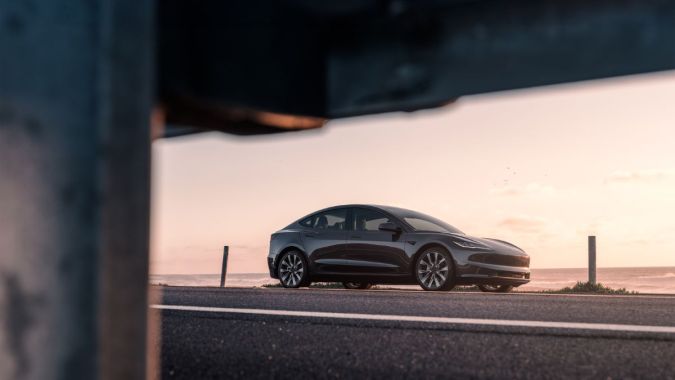
At the international level, the debate is already translating into concrete measures. In China, for example, it was announced that Tesla’s self-presenting handles will be banned starting in 2027 due to the risks they pose in emergency situations.
Tesla’s position and possible changes
Tesla has responded by publishing safety information stating that its vehicles are designed to automatically unlock the doors after a crash. However, the company recognizes that there are limitations on certain older models, depending on the date of manufacture and the type of damage suffered.
From the design area, the brand has announced that it is working on a hybrid redesign, which combines electrical and mechanical systems to reduce the risk of total blockage. Still, critics maintain that current solutions are not intuitive enough for extreme situations.
Continue reading:
Dodge releases the 2026 Durango Hellcat throughout the US
Surprise: the Ram Dakota returns and aims at the medium segment
Volkswagen’s most advanced electric vehicle does not arrive in the US