
Li Chuangye is a 37-year-old doctor whose story of overcoming adversity and his love of mountaineering has inspired millions of people on the internet.
As a child, he suffered from polio, and was forced to beg throughout China for 7 years.
But at 16, Li decided to learn to read. Then he managed to enter university, become a doctor and started climbing mountains to get stronger.
Dr. Li, who now runs a small rural clinic, spoke to the program Outlook from the BBC World Service. What follows is an adapted version of his story.

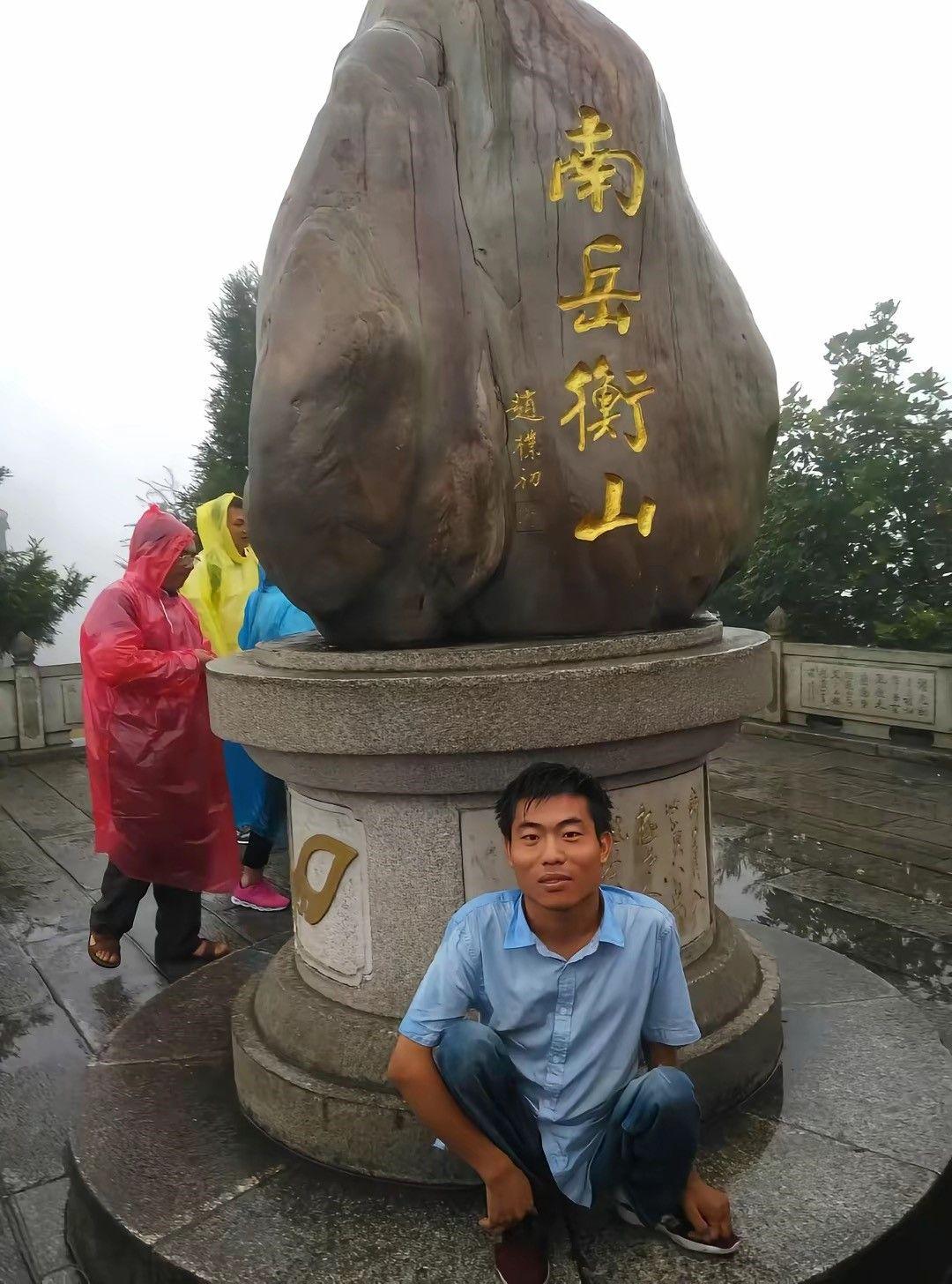
Li Chuangye was born in 1988 to a humble farming family in the Chinese province of Henan and contracted polio when he was just seven months old.
His illness severely affected his mobility, so he could only move around by squatting.
As a child, he suffered a lot of teasing. They told him that it was “waste” and that “he could only eat it and had no other use.” “That hurt me a lot,” Li says.
At age nine, his parents heard that surgery on his legs would allow him to walk, and they borrowed money for the surgery.
Li had high hopes for the operation. “When I was recovering in the ward, other children were crying, but I smiled because I felt that soon I would walk like a normal person,” she says.
But the surgery failed, crushing Li’s hopes of walking and plunging him into a deep depression.
He felt that his life had no meaning and told his mother that he would rather die.
His mother told him not to give up. “We’re raising you so that when we’re old, we’ll have someone to talk to,” she told him.
Her words shook him. “I thought about how much my parents and family had sacrificed for me, and I burst into tears. I realized that I had to live, not only for myself but for them,” Li recalls.
Shortly after, a person who came from another place came to their village looking for disabled children to take them to sell incense in the temples.
The man promised that Li would send home the equivalent of his father’s monthly salary at the time.
“My parents were firmly against it, but I saw it as an opportunity to make money and ease the burden on my family,” Li recalls.
And, thus, he agreed to follow the subject.
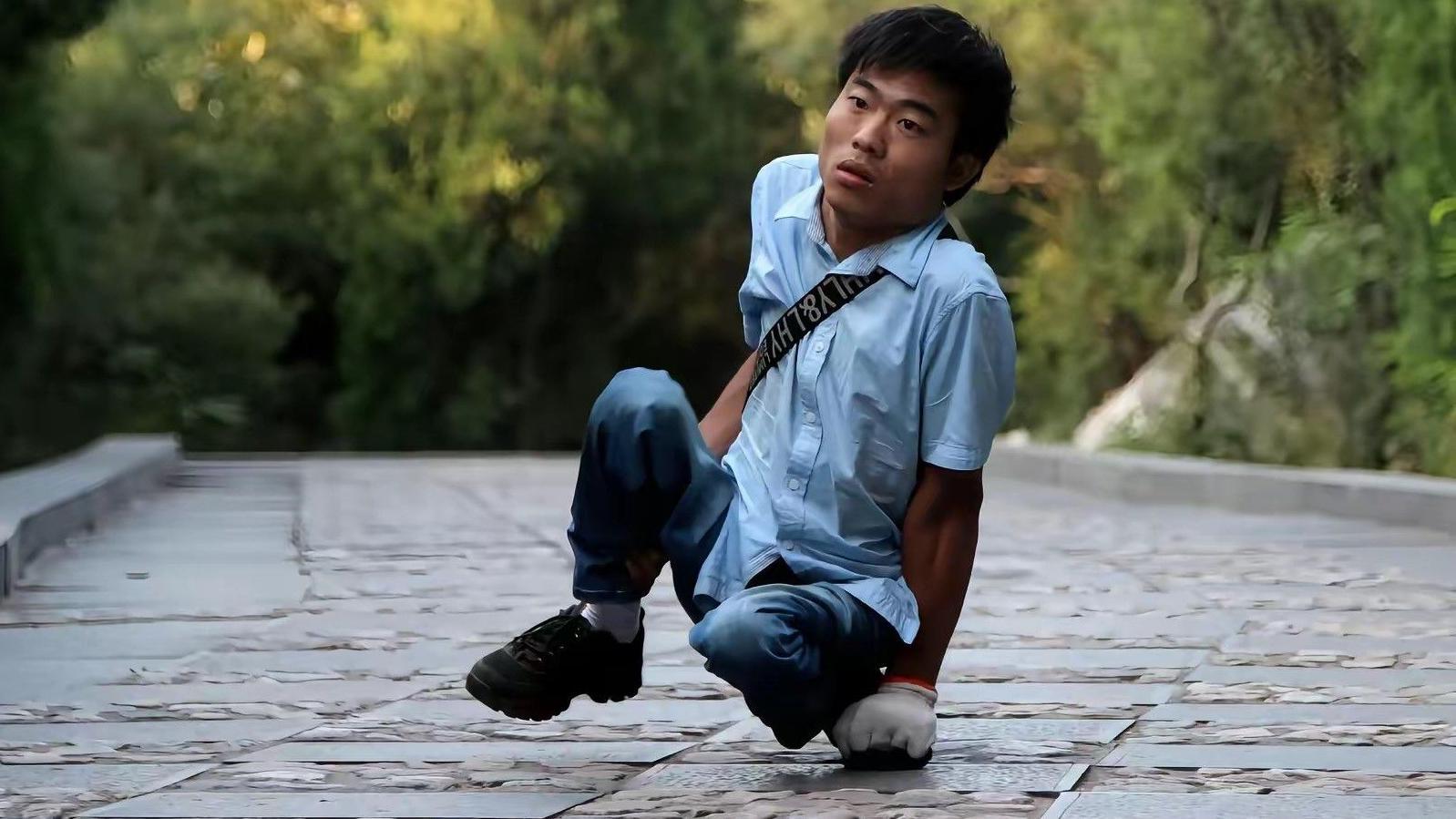
Begging in the street
But the promise of work was a deception.
Dr Li claims the stranger ran a begging operation and, for the next seven years, was forced to beg on the streets with other disabled children and adults.
On his first night with his new “boss,” one of the other children warned Li to work hard or he would be beaten. This turned out to be true.
The next morning, Li was left on the pavement, shirtless, with a coin jar and his legs twisted around his back in a position that the subject thought would provoke more pity.
Li didn’t understand why people put money in his pot until passersby asked him why he was begging when he should be at school.
“In my hometown, begging was shameful. I didn’t realize that’s what I was doing. Realizing that crushed me,” Li says.
Li could earn a few hundred yuan a day, a lot of money in the 1990s, but it all went to his boss. “If I earned less than the other children, he accused me of being lazy and sometimes beat me.”
“Those years were really painful.”
Over the years, other children ran away or were sent home by the police, but Li stayed, determined to help his family. When the police offered him help, he refused, insisting that he was with family.
For seven years, winter and summer, Li traveled around the country begging.
“It felt like living in hell. I was embarrassed, avoiding eye contact, with my leg painfully twisted back to give me pity. I was praying for rain or nightfall so I wouldn’t have to beg,” he said on the program. Outlook from the BBC World Service.
Every New Year’s Eve he called home, assuring his parents that everything was fine and they needn’t worry.
“But after the call, I was crying in my room. I couldn’t tell them that I was begging on the street.”
Even now, 20 years later, the trauma remains. “Begging left me with deep psychological scars, I still dream about it and wake up relieved to discover that it is just a dream.”
A new path through education
Everything changed when Li picked up a newspaper on the street and realized he could only read the characters in his name.
At 16 years old, he decided to return home and go to school.
“I don’t know how to read or write, and only through education can I change my life,” he remembers thinking.
Around this time, the government had introduced a new policy making it a crime to use disabled children for begging.
Li also heard that his family’s financial situation had improved.
He told his boss that he wanted to visit his family and he gave him permission to go.
After being reunited with her parents, they discovered how she had really been living, and Li was enraged to discover that her exploiter had sent them much less money than promised.
With the support of his parents, Li enrolled in the second year of primary school, with students 10 years younger than him.
On his first day, the children crowded around his desk, but he didn’t care.
“I wasn’t upset, I had faced so much ridicule and adversity before, that now, as a student, I just wanted to focus on learning.”
Li became the most dedicated student, even though his physical condition made tasks like getting to the bathroom arduous.
“It took a lot of effort to go to the bathroom, so I often forced myself not to drink water at school.”
Through unwavering determination, Li completed primary and secondary education in nine years. He invited the village children to play and then asked them to help him with his homework.
When it came time to apply to college, his physical condition limited his options, but he was able to apply to medical programs. He thought, “If I become a doctor, maybe I can investigate my own condition and I can help my family, save lives, and contribute to society.”
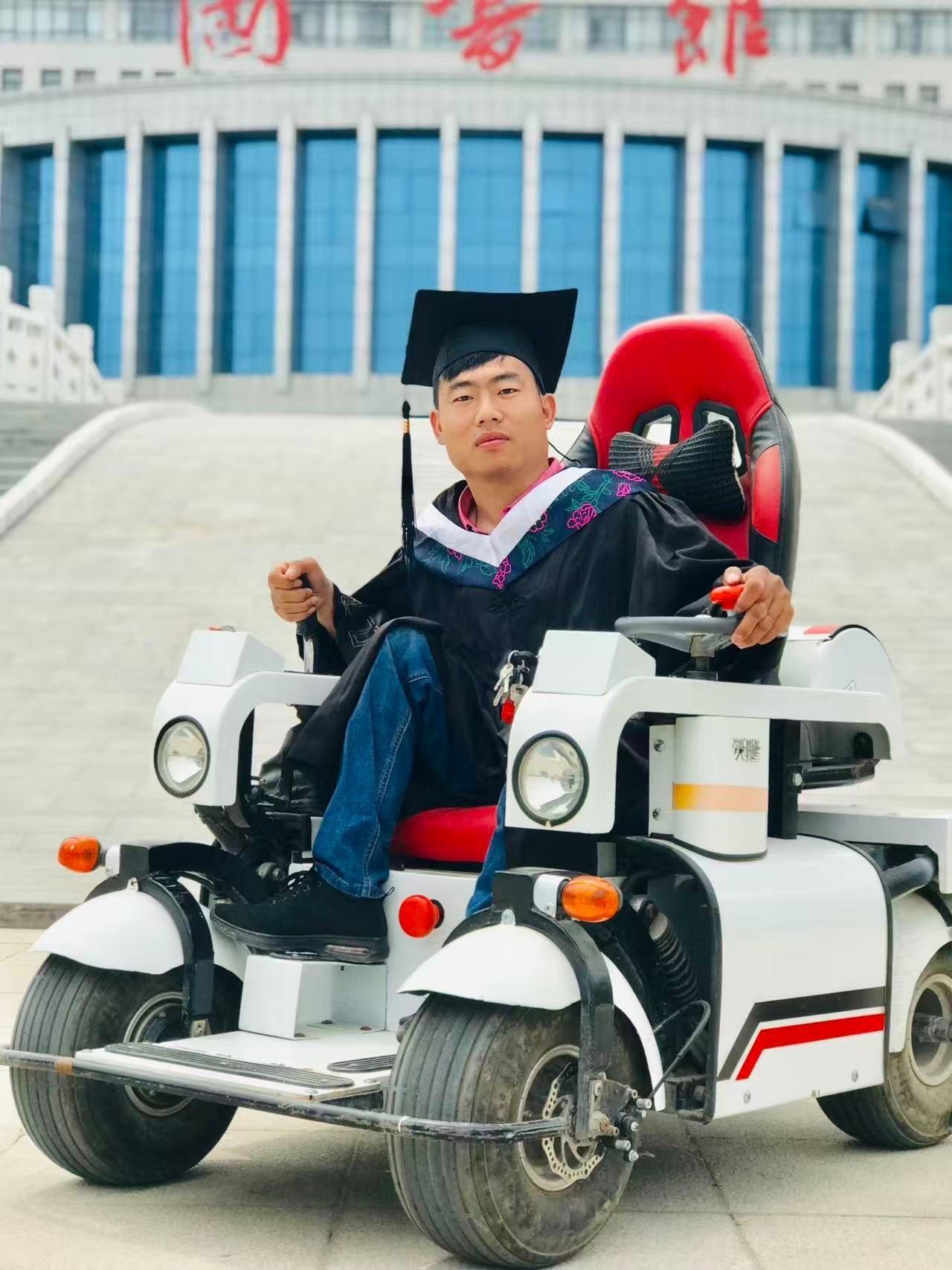
Li was admitted to medical school at the age of 25. The facilities were more accessible there, but he found the practical classes to be the most difficult.
“While my classmates could easily follow the professor to visit patients or run between rooms during internships, my mobility problems made it difficult for me. What others learned in a day could take me much longer.”
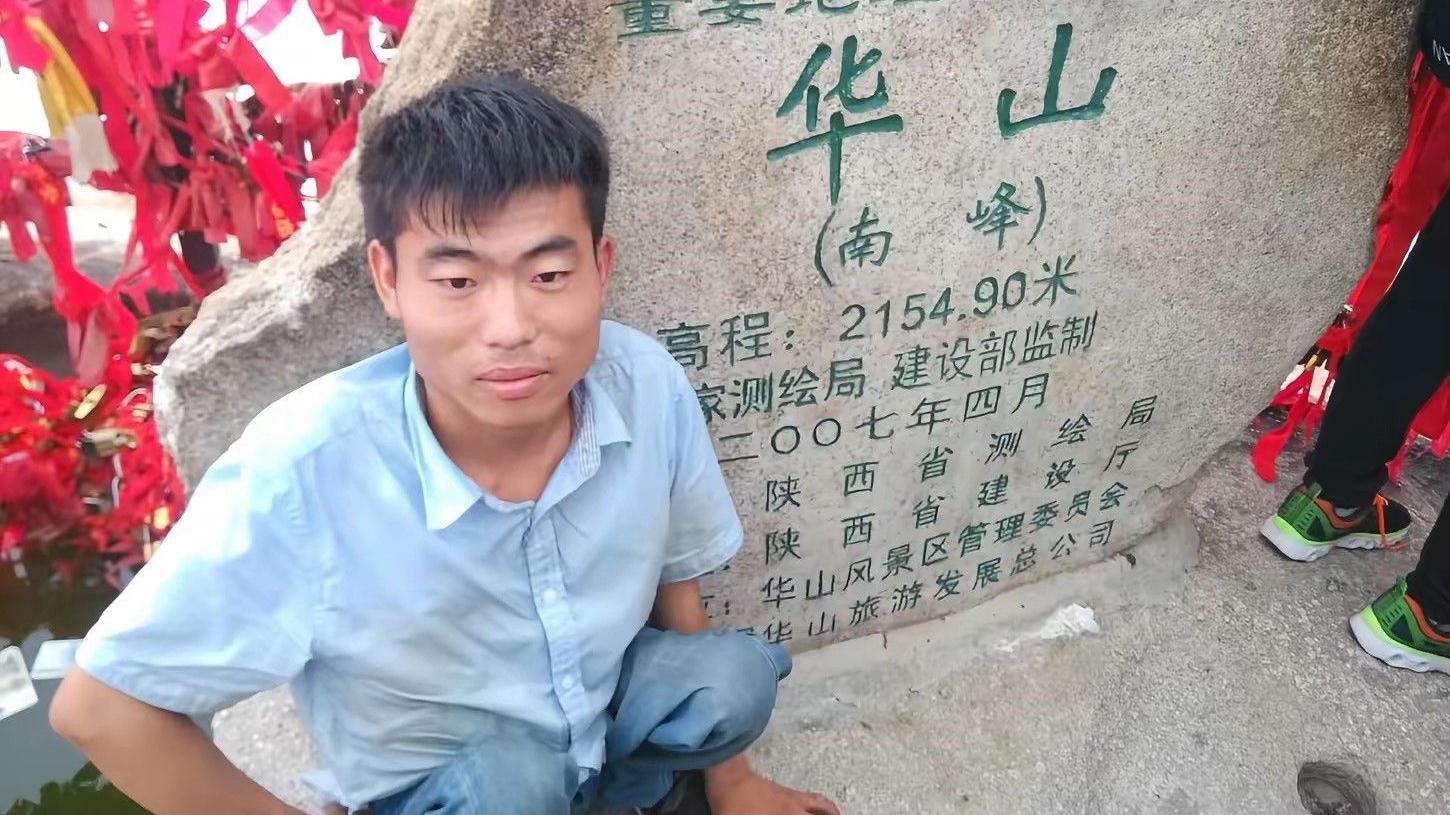
Li felt that he had to get stronger and decided to start climbing mountains.
On his first trek, it took him five days and nights to reach the top of Mount Tai.
When his hands and feet cracked and began to bleed, he did not give up, but slowly climbed each stone step.
Mountaineering became his passion and his videos climbing mountains became a viral sensation.
Now, Li runs a small rural clinic in Xinjiang, where he is on call day and night. His patients call him their “miracle doctor.”
“Taking care of patients with my own hands, improving the health of my neighbors, that satisfies me more than anything,” he says.
Li hopes the reach of his story in Chinese communities around the world will help change attitudes.
“Some see disabled people as useless. In restaurants, I have been mistaken for a beggar when I am squatting and told there is no food. I smile and leave, most people are friendly.”
A life with confidence and purpose
Many people have asked Li why he didn’t report the man who exploited him.
“I decided to let the past be the past,” he responds.
“Those seven years were a painful experience, but they were part of my life.”
Li’s path changed his perspective. “After I was able to go to school, I stopped caring about the opinions or judgments of others. I realized that those things were meaningless. I wanted to focus my time and energy on studying and achieving my life’s purpose.”
He says many disabled people “struggle to move on” because they fear being judged or ridiculed.
“But for me, that’s not the point. I move around campus and cities squatting or crawling, whether to attend classes and workshops or to help hundreds of disabled friends through my work. I think I look confident in myself doing it. I no longer care about the looks of others.”
To the audience, he offers this wisdom: “Our lives are like mountains: we climb one and there is another ahead. We constantly strive and progress.”
“I believe that a person should always stay positive, optimistic and never give up on their dreams.”

click here to read more stories from BBC News World.
Subscribe here to our new newsletter to receive a selection of our best content of the week every Friday.
You can also follow us on YouTube, instagram, TikTok, x, Facebook and on our channel WhatsApp.
And remember that you can receive notifications in our app. Download the latest version and activate them.