
The displacement that the population of Gaza has experienced is not preceded and is “different from any other since World War II,” experts declared experts to the BBC.
The lack of safe places to move and the repeated displacements within a small and densely populated area are extremely unusual, according to historians and academics specialized in conflicts, forced migration and international law.
Nine out of ten inhabitants of Gaza have fled their homes during the two years of war, according to the UN, while the borders remained practically closed.
Israel has repeatedly ordered people who leave specific areas, which has caused massive population movements. He affirms that these orders are part of “extraordinary measures” to protect civilians in their attacks against Hamas.
Some human rights groups affirm that the situation constitutes a forced displacement.
On average, families in Gaza have moved six times during the conflict, some up to 19 times, according to an investigation by the Danish council for refugees in 2024.
In recent weeks, Israel’s last offensive in Gaza City has once again forced hundreds of thousands of people to flee.
Like many inhabitants of Gaza, Soha Musleh, a nurse with two young children, has been tight in one area after another as Israel has expanded its operations, sweeping whole neighborhoods.
“The displacement in Gaza is different from everything we have seen since World War II, not in terms of the number of displaced, but in terms of conditions,” says Dawn Chatty, professor of anthropology and forced migration at the University of Oxford.
“In Gaza, the Palestinians do not have to go. They are forced to flee from an insecure place to another.”
Israel frequently sends brochures, SMS messages and communications in social networks urging Gazati to “evacuate” specific areas.
During the war, he has urged them to move to Al-Mawasi, a small sandy coastal area with few services, which Israel has designated as “humanitarian zone”, but has repeatedly bombarded.
The Israel Defense Forces (FDI) informed the BBC that the evacuation notices issued in Gaza are carried out “to protect civilians” and “residents are allowed to evacuate for their safety through the designated evacuation routes and corridors.”
They claim that they operate in accordance with international law. The FDI accuse Hamas of “embedding in the civil environment” and they say they do not attack humanitarian areas but act against threats and military activities within them.
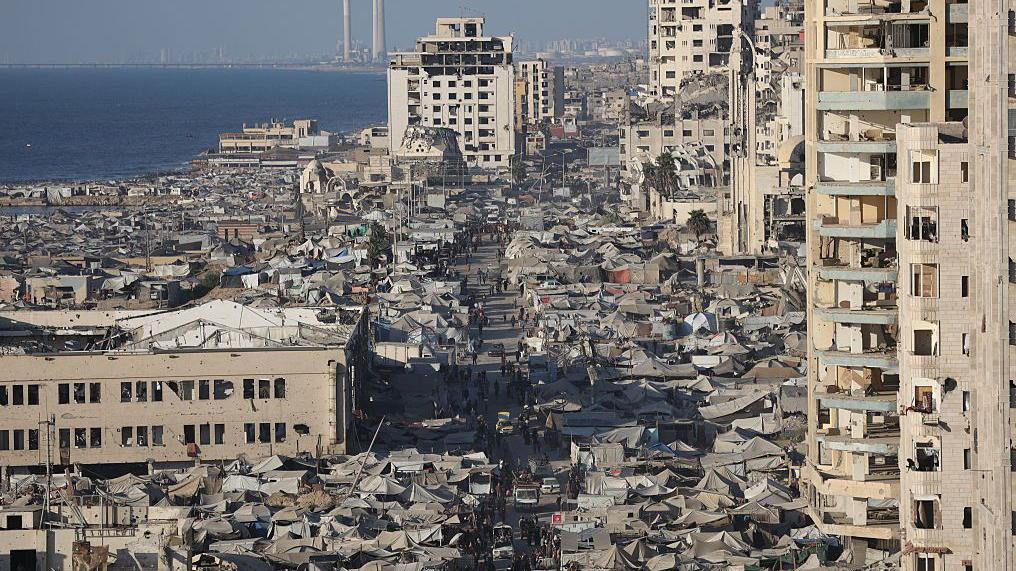
Waves of displacements
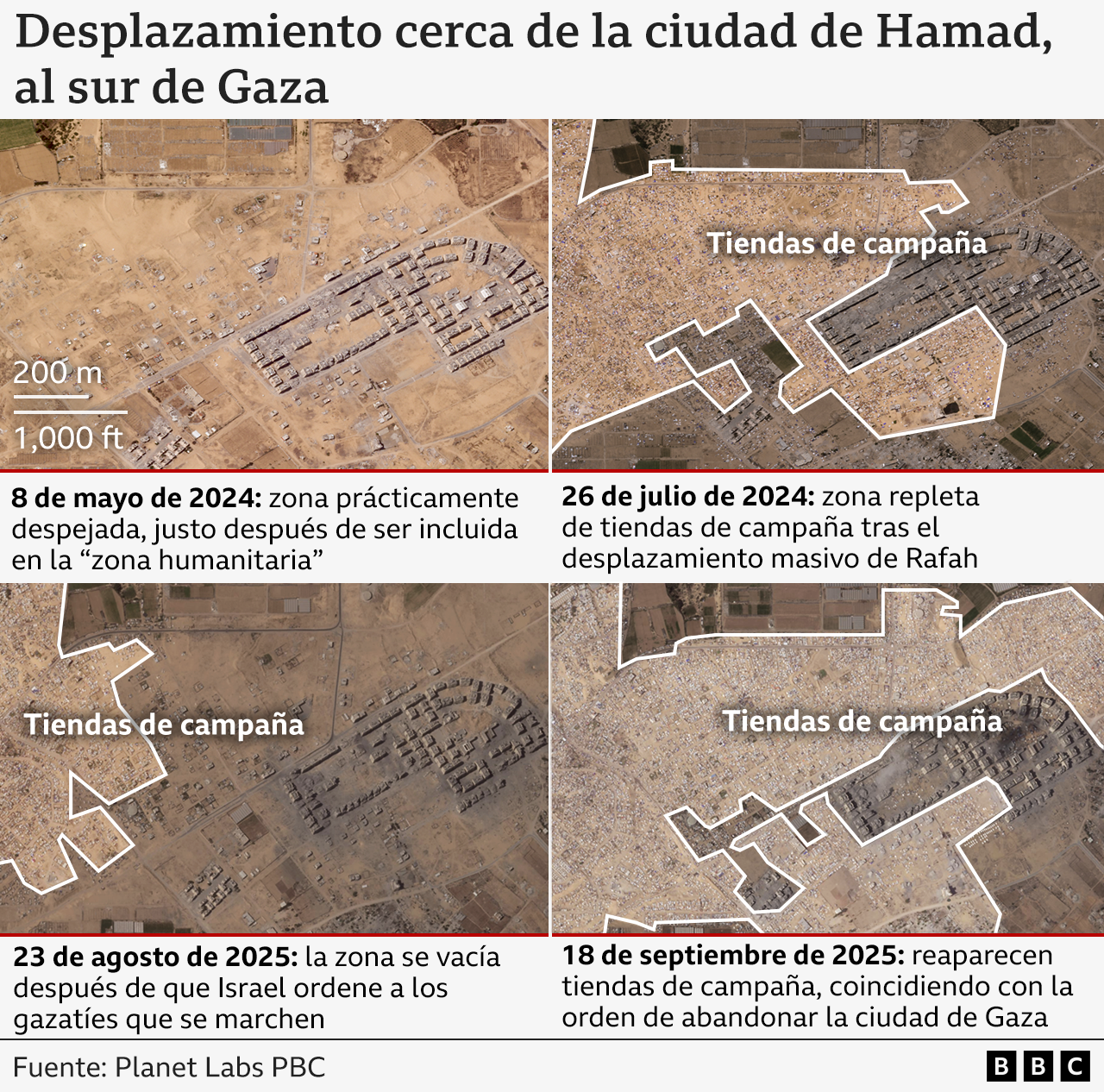
The impact of these orders is visible on satellite images that show the constant displacement of large campaign camps and improvised shelters in some parts of Gaza.
For example, the Hamad City neighborhood, near Al-Mawasi, began to be filled with tents in May 2024, being designated as part of the “humanitarian zone.”
For July of that same year, the land that had previously been empty was densely populated (image below).
Since then, Israel has ordered residents to go twice. In both, the area was evicted from tents, but subsequently was repopulated, after Israel included it again in the “humanitarian zone.”
It was once in August 2024, when the Israeli army reported that a nearby area was being used to launch rockets against Israel. The other was approximately a year later (image below).
Soha and his family passed near the city of Hamad in the spring of 2024, on the way to the nearby of Al-Balah. “Sometimes, the only thing you get is your life, and then you have to start from scratch,” he says.
Some of his eight displacements occurred after important population movements during the war: from northern Gaza in the first weeks after Hamas against Israel on October 7, 2023, to the city of Jan Yunis, and then to Rafah, in the south, until Israel launched a land invasion there.
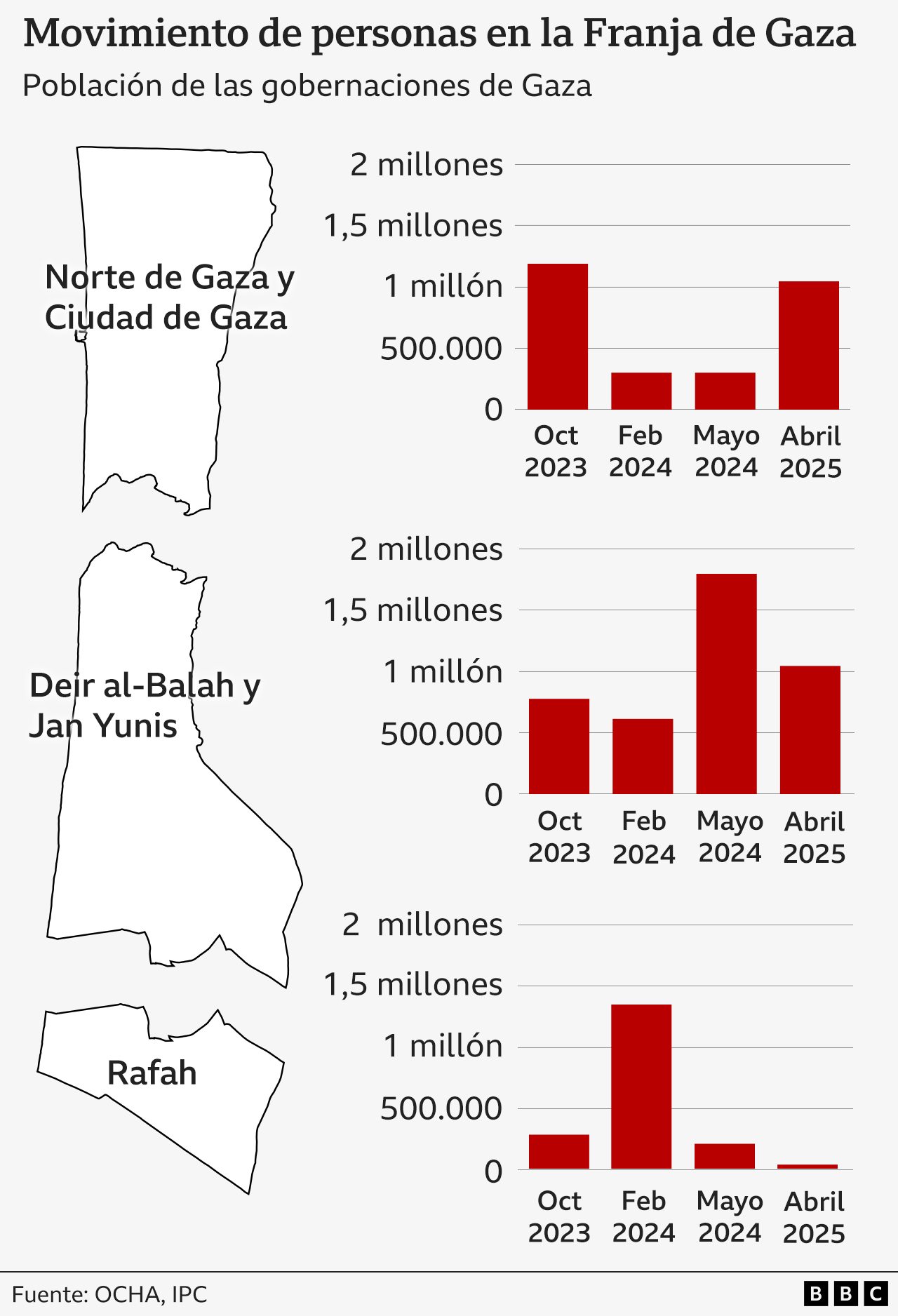
These displacement waves have caused the decrease and population growth of Gaza’s cities and regions.
Rafah destroyed
The two governments of the North of the Strip lost three quarters of their population in the first four months of the war.
Rafah housed approximately four times the population he had before the war for several months in early 2024, until Israel ordered the people to leave.
Today, Rafah is almost completely destroyed and few people are there. The majority went to the two central areas of Gaza -Jan Yunis and Deir Al-Balah- whose joint population almost tripled.
Professor Daniel Blatman, a historian specialized in the Holocaust of the Hebrew University of Jerusalem, affirms that Gaza displacement differs from others in the world due to “entrapment, repetition and lethal conditions.”
“In Gaza, civilians are trapped within a sealed strip, with the order to move again and again to crowded areas, qualified as ‘humanitarian’, even while hostilities occur in the immediate vicinity,” he says.
Yuval Shany, a professor of international law, also from the Hebrew University, affirms that the situation in Gaza is not precedents in terms of the “inability of the vast majority of the civilian population to completely abandon the conflict zone.”
A stripe sealed under military control
He affirms that both Israel and Hamas “endanger the civilian population in their operations”, and the lack of international pressure on Israel and Egypt to open their borders has been “remarkable.”
Norman JW God, professor of Holocaust studies at the University of Florida, states that this type of “induced displacements are unfortunate”, but believes that “the alternative would have been that the Israelis had attacked Hamas’s positions without prior notice to civilians.”
He states that “safe areas” require the consent of all parties in a conflict. Hamas “could have recognized the safe area” that Israel tried to establish in Al-Mawasi, but “continued to use it for its operations,” he says.
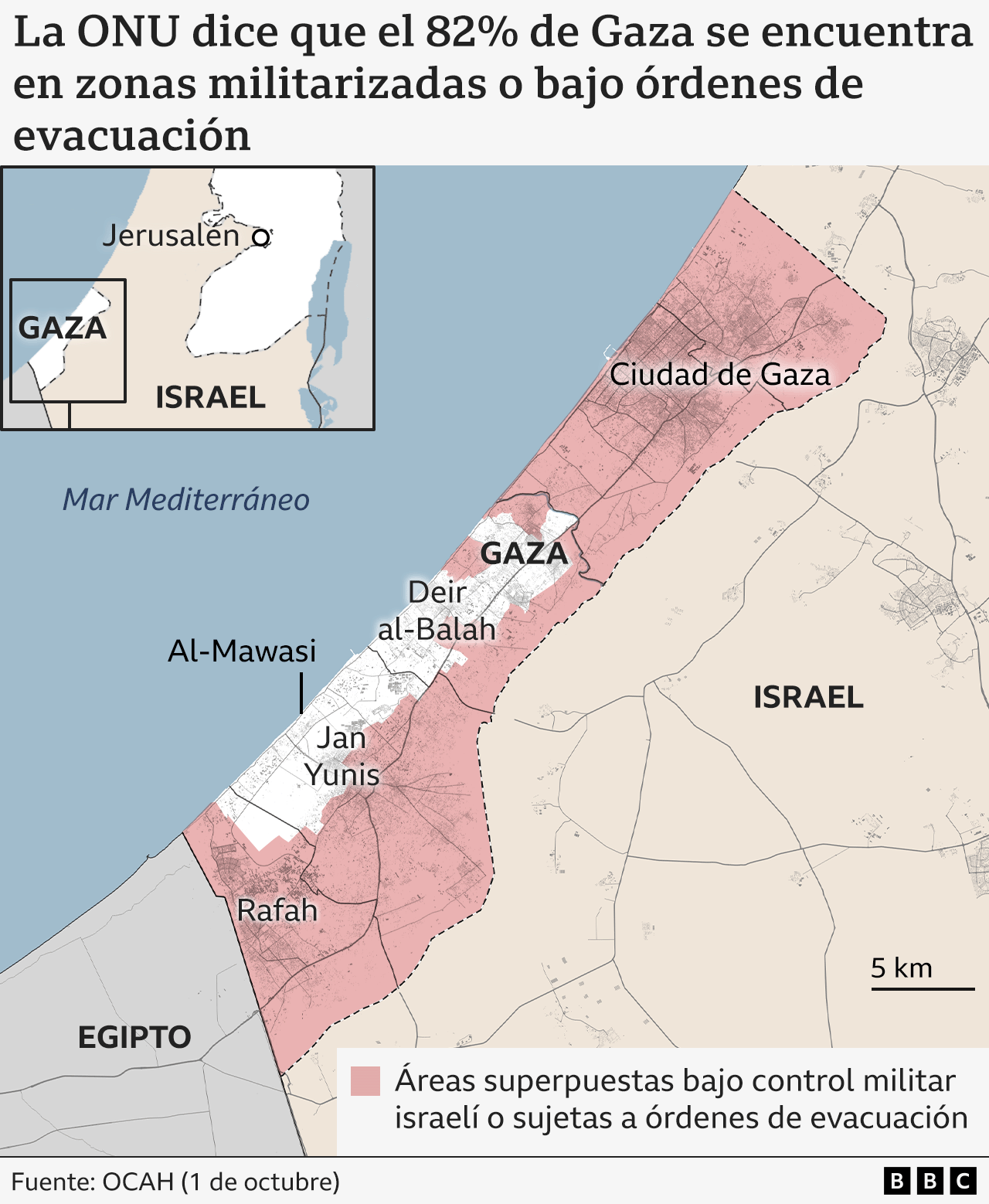
In recent months, more than 80% of the Gaza Strip has been under Israeli military control or under the evacuation orders of residents; In July it reached 88%, according to the UN.
At its smallest point, the remaining area was equivalent to a strip of about 9 km long and 5 km wide, smaller than Manhattan. The UN points out that parts of it are covered with rubble, which further limits the habitable space and hinders living conditions.
The displaced gazaties face extreme overcrowding. People living in tents and shelters throughout the enclave have an average of half a square meter per person, according to figures from a group of agencies that work with the UN in the field of the shelter in Gaza. This is equivalent to 40 people live in a 4 x 5 meter room.
Although community kitchens, water distribution points and campaign clinics work in the area, humanitarian aid agencies claim that it is difficult to satisfy the growing demand for services, accusing Israel of “systematic obstruction” to the entry of food and help to the Gaza Strip.
The Israeli army informed the BBC that they are increasing the supply of food and medical and refuge equipment to Gaza, and emphasized that “the humanitarian infrastructure in the south is prepared for the size of the planned population.”
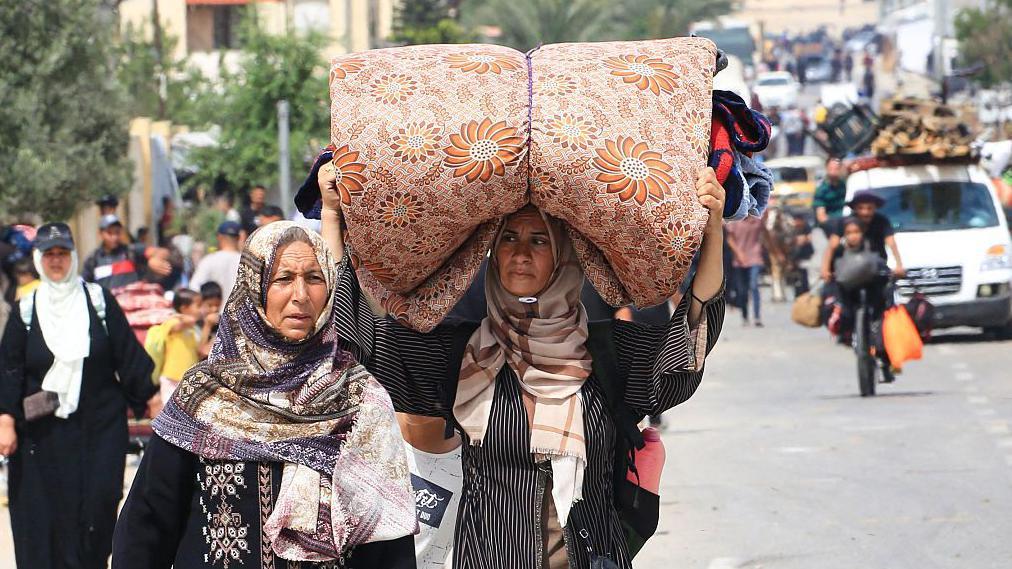
For many Palestinians, the situation keeps parallels with what they call Nakba (the day of the catastrophe), when some 750,000 Palestinians fled or were expelled from their homes in the 1948-1949 war that consolidated the creation of Israel.
Many Gazati are descendants of them, including Husam Zomlot, head of the Palestinian mission in the United Kingdom.
Zomlot states that “they know very well what happened” in 1948.
“Once the Israeli army asks them to evacuate by force, they know they can never return to their city. This happened in the Nakba and this is what is happening to them again.”
He affirms that the Israelis “are destroying what remains of Gaza”, so that the displaced people “do not have to return.”
“It is an intentional displacement,” he adds.
Serious questions
Both Human Rights Watch and the UN Commission concluded that Israel is committing genocide have stated in reports that forced displacement has occurred in a way that constitutes a war crime. Amnesty International and the UN High Commissioner Office (ACNUDH) told the BBC that they also share this opinion.
The ACNUDH spokesman told the BBC that communications, in general, “do not meet the strict requirements of legal evacuation,” and listed among the reasons the “massive, generalized and repeated nature of the orders, which do not respond to immediate military needs or the safety of civilians”, and the attacks that have affected civilians who have fled.
Several experts with whom the BBC spoke claim that they consider that the displacements are forced and do not comply with international law.
Another of the experts, Dr. Shany, affirms that there are “serious doubts” about whether they meet the legal criteria for evacuations.
The Israel Embassy in London told the BBC that categorically rejects the accusations of forced displacement, war crimes and genocide. “Israel takes extraordinary measures to minimize damage, even at the expense of military surprise,” he said.
He states that the evacuations “are temporary and are implemented to protect the lives of civilians” and are carried out in “strict adherence to international humanitarian law.”
Israel “has no intention of governing Gaza,” he adds.
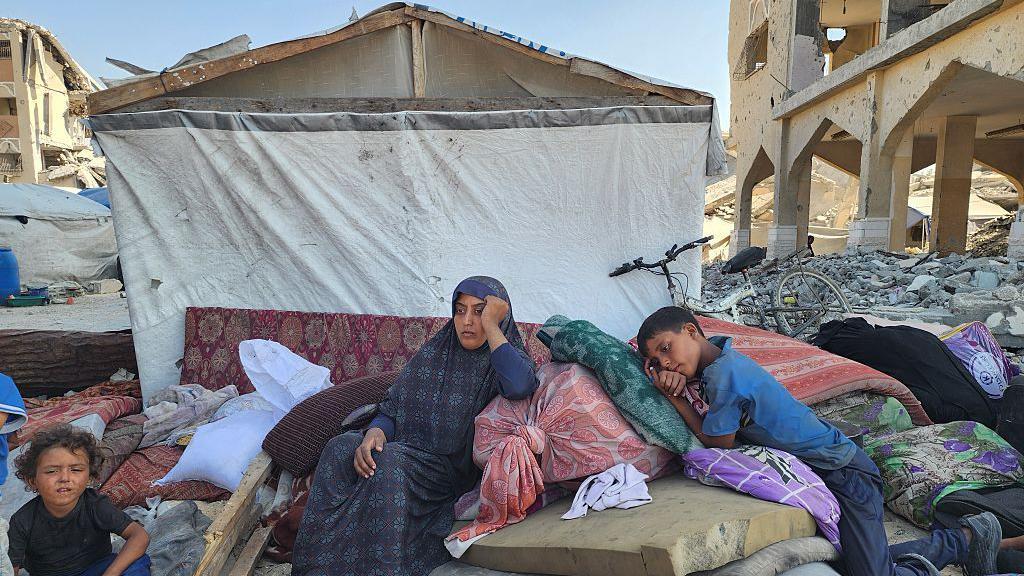
The Israeli army launched its last campaign in Gaza in response to the unprecedented attack led by Hamas against southern Israel on October 7, 2023, in which some 1,200 people died and 251 were taken as hostages.
More than 66,000 people have died and about 170,000 have been injured in Israeli attacks in Gaza since then, according to the Ministry of Health of the Territory, whose figures the UN considers reliable.
The UN also estimates that approximately 92% of Gaza’s homes (about 436,000) have been damaged or destroyed since October 7, 2023. This figure is based on figures from the Ministry of Local Housing.
Soha, her husband and two children now live in Nuseirat, in the center of Gaza, along with her parents and the families of her brother and sister, overcrowded in the apartment of a relative of a relative, who also suffered damage.
“We live there and we manage. In the end, it is better than a tent,” he says.

Click here To read more BBC News World Stories.
Subscribe here To our new newsletter to receive every Friday a selection of our best content of the week.
You can also follow us in YouTube, Instagram, Tiktok, X, Facebook And in our channel of WhatsApp.
And remember that you can receive notifications in our app. Download the latest version and act.